
Catena Wines Aging Well
Dr. Laura Catena looks back on 3 decades of wine

The vast majority of wine purchased today is consumed within a year — if not within hours — of purchase. That’s our modern on-the-go lifestyle, which typically doesn’t include a temperature-controlled cellar — or the patience — for aging wine.
But the classics were made to age, and for some it’s still a mark of greatness when a wine shows life many years after its vintage. Wine is a living thing, after all, and we all like to think we age well. (*Ahem*)
So I was excited to be invited to a tasting at the Embassy of Argentina hosted by Dr. Laura Catena, featuring several older vintages from the Catena Zapata winery in Mendoza. (The tasting was co-hosted by Winebow, the importer for Catena.) I’ll confess to being a fan — Laura Catena is the type of person that when you meet her, you’ve been friends for life. She’s also a dynamo — a retired medical doctor; founder of the Catena Institute of Wine, which has done some fascinating research on terroir among other topics; and publisher of In Defense of Wine, a website aggregating scientific research showing health benefits of moderate wine consumption, an important counter to The New Prohibition and its “no safe level” mantra.
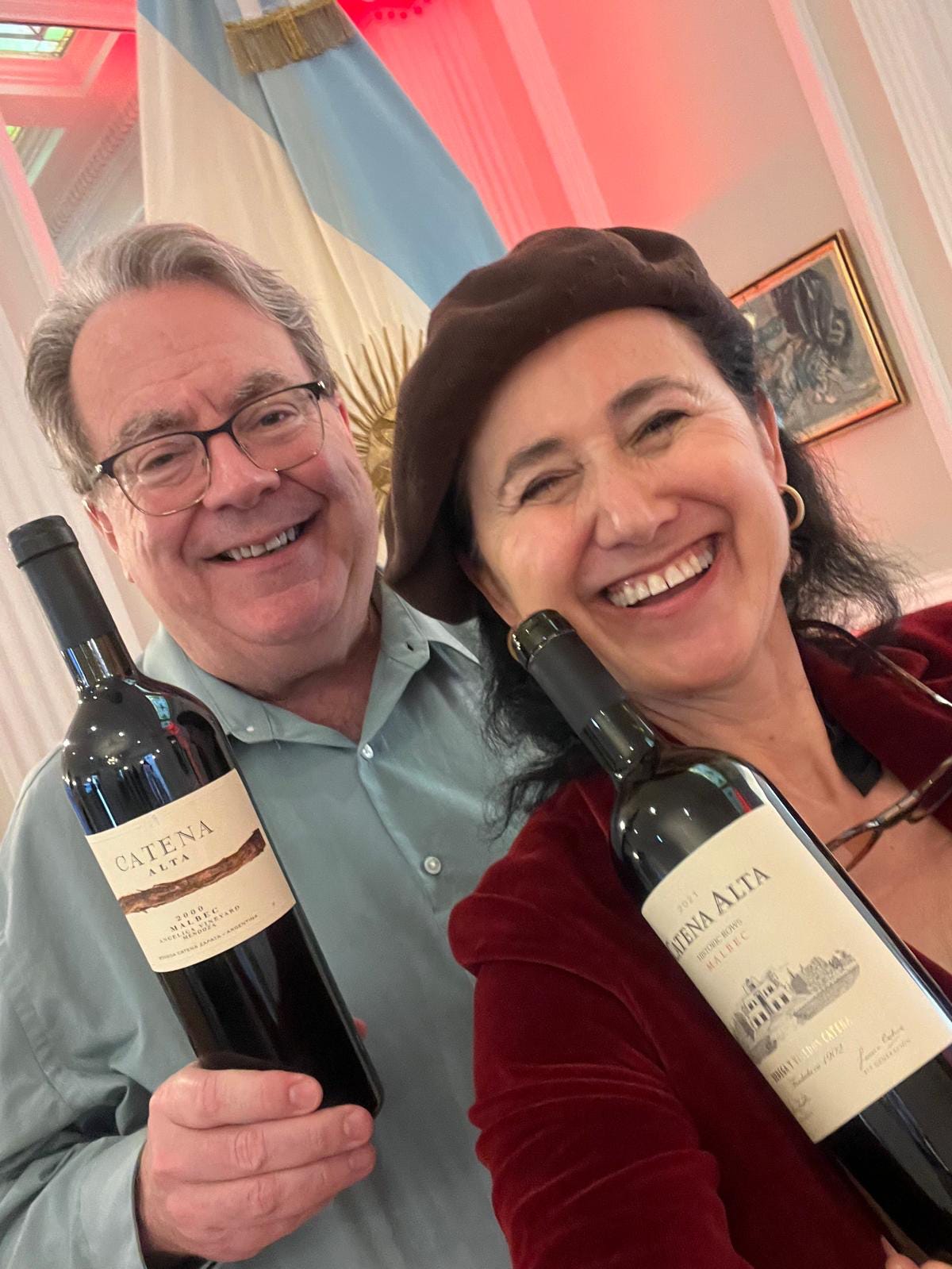
Catena opened the tasting with a memory: At the same embassy in 1997, she and her father, Dr. Nicolas Catena, and their then importer, Alfredo Bartholomaus, poured several Catena wines for Robert M. Parker, Jr., publisher of The Wine Advocate and at that time in his prime as the world’s most influential wine critic. He published rave reviews, and Catena wines — and more broadly Argentina’s wines — never looked back.
“He gave us these incredible scores and declared Argentina could make it big, and that changed everything for us,” Catena recalled. “I know some people don’t like scores, and there is something strange about putting a number on something that is art, but with Argentina coming into a market where nobody knew us, those scores made a big difference.”
The oldest wine at the tasting, a 1994 Cabernet Sauvignon, was one of the wines poured for Parker that day. Catena said the winery didn’t start holding back significant amounts of wine until the early 2000s — “We were happy to sell it!” —but now is re-releasing two 20-year old vintages each year.
She also discussed the evolution of winemaking at Catena. “Some people complained that we used too much oak in the early years, and we’ve definitely scaled that back,” she said, wondering if we’d notice it. Several tasters (including me) did comment on some apparent oak on the older wines. Did she predispose us by alerting us to the question? Perhaps, but Catena isn’t the only winery that became more deft with oak in the past two decades.
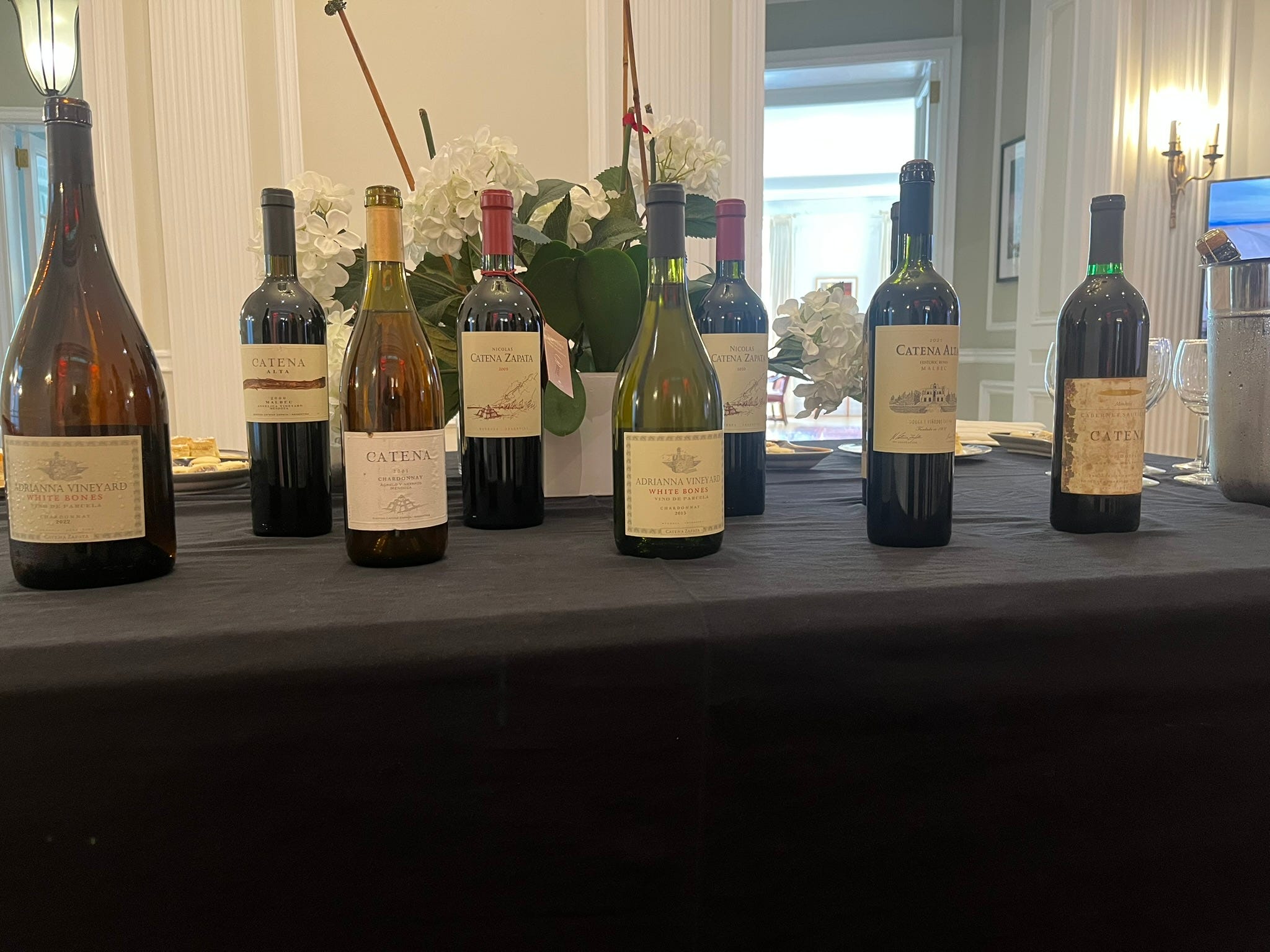
Here are my notes on the wines poured, in the order tasted:
Adriana Vineyard White Bones Chardonnay 2022. One of two high-end Chardonnays from this vineyard (the counterpart is White Stones, the names reflecting the soil types of the rows the wines are from). Light straw color. Nose: Lemon oil, lemon curd, lime zest. Mineral, but also herbal. Palate: Racy, firm and lithe. Lighter body than I recall from earlier vintages. Long, citrusy finish.
Catena Chardonnay 2001. This was the surprise of the tasting, with several guests marveling at how complex and vibrant the wine was for its age. The color was almost brown, and did not inspire confidence — the eyes needed help from the nose, which picked up aromas of toasty caramel. The palate was slightly maderized (Sherry-like), nutty — hazelnuts? Or walnuts? Both? Toasted nuts, suggesting the wine could be dessert or pair with a nut tart. The acidity was still quite lively.
Adriana Vineyard White Bones Chardonnay 2015. A good preview of how the 2022 might age. Color was honey yellow, beginning to show some age. Nose: Still some herbal character — sage, thyme, bay leaf. Someone else suggested cardamom. This one seemed to me to be in transition, beginning to take on attributes of an older wine. Considering it’s already a decade old, that was darn impressive.
Catena Alta Malbec 2021. Vibrant ruby color, almost opaque. Clear rim. Nose: almost candied fig, deep berry and a hint of tree bark or cola. Palate: Plush texture, dark red and black fruit, some oak tannins apparent on finish.
Catena Cabernet Sauvignon 1994. Color: ruby/brick, with a brick rim, clearly showing its age. Nose: Quiet at first, but swirling teased out some cola notes. Palate: Sweet berry flavors with good texture and structure; long finish.
Catena Alta Malbec 2000. Color: Ruby, with some brick; more brick on the rim, showing its age. Nose: Quiet, then herbal with woodsy/forest character, then spice — fenugreek. Palate: Toffee? Dried fruit compote, wood tannins apparent on finish, though not overwhelming.
Catena Zapata Malbec Argentino 2005. Color: Not the purple vibrancy of youth but also not really showing its age. No way I’d pick it as a 20-year-old wine in a blind tasting. Palate: Soft texture, some drying tannins. Good long finish.
Nicolas Catena Zapata 2020. Color: Deep purple shows a youthful wine, even at 5 years old. Nose: Expressive and buoyant, with dark fruits, coffee and roasted notes. Palate: Intense, spicy dark fruit and a finish that refused to finish.
Nicolas Catena Zapata 2005. Medium ruby color. Nose and palate were pretty much what I expected the 2020 might taste like in another 15 years.
(All the wines were single varietal, except for the Nicolas Catena Zapata, which is a blend of Cabernet Sauvignon and Malbec.)
Do you have any favorite Catena wines or memories? Tell us in the comments.
I've only met Laura on a live Zoom event, but she is absolutely charming. Just FYI, since 2019 the Nicolas Catena Zapata has included a healthy quantity of Cabernet Franc too.
Have admired Laura, her wines and especially speaking out on wine & health from an informed position, for years. Thanks for introducing her to your followers!