
Letter from Porto
The world's oldest demarcated wine region becomes a tourist mecca

On my first visit to Porto in 2006, the Av. de Diogo Leite in Vila Nova de Gaia, along the southern shore of the Douro River, was a sleepy street with a few port houses, such as Sandeman and Calem, and a small, quiet restaurant where I dined on sardines and linguiça, the Portuguese sausage.1 Across the street, along the river and its wonderful view of Porto itself, a desultory barco rabelo or two, the old boats the port shippers used to carry barrels of wine downriver from the Douro vineyards, stood moored as testament to the Douro’s history as one of the first demarcated wine regions and a UNESCO heritage site.
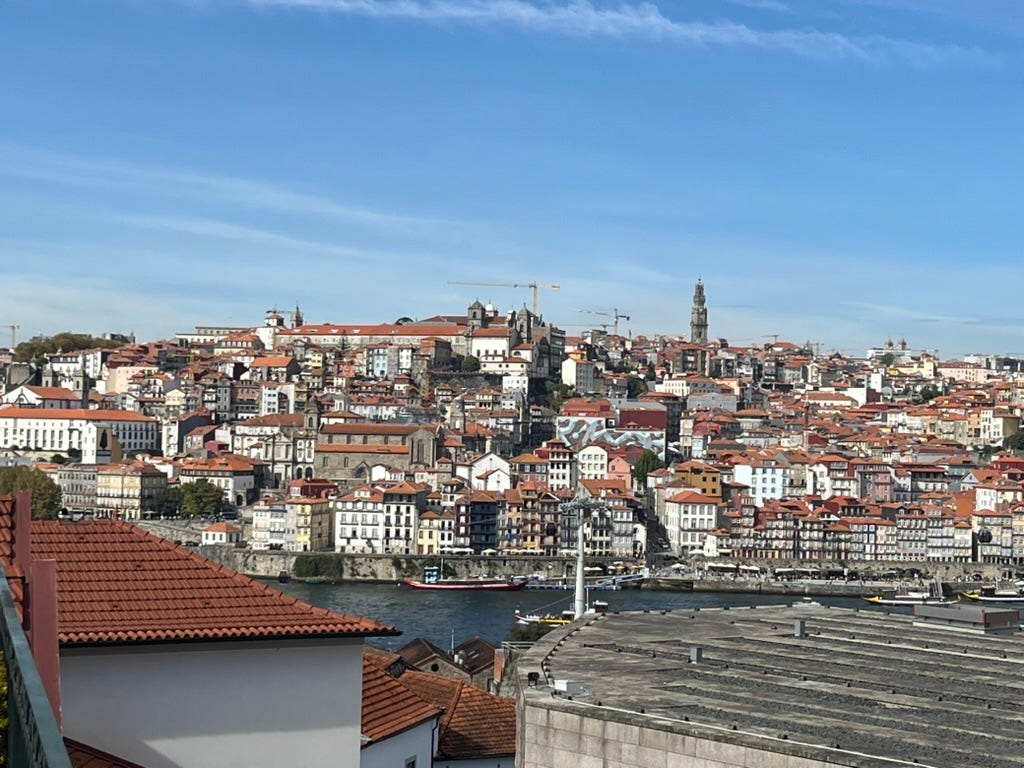
Last Friday was my fourth visit, my first since 2015. The Av. de Diogo Leite was streaming with tourists — Americans on holiday, Brits reconnecting with their country’s historical role in port wine, Germans and Eastern Europeans on a three-day weekend. Several hundred sipped port-based cocktails at a buzzy al fresco bar on the plaza of the Sandeman cellars. Buskers belted ballads through portable boombox speakers. Restaurant greeters waved menus at passersby. Tourists thronged into an old row house with neon lights proclaiming “the fantastic world of the PORTUGUESE SARDINE,” walls festooned with tins of fish and a selfie station where visitors can pose on Neptune’s throne. Next door stood a similar temple to bacalao, the salt cod that fueled Portuguese exploration and colonization, with paeans to cod fritters and a sign proclaiming “Cheesy Sheep.” Perhaps the tourism industry here isn’t too polished, yet.
But tourism is increasingly important for Portugal as a whole, and much of that is Americans. Portugal welcomed about 50,000 American visitors annually a decade ago. In 2024, that number reached nearly 1.4 million. The hope, of course, is that these visitors will fall in love with Portuguese wines and ask for them back home. Wine may be in the global market doldrums, but you wouldn’t know it in Porto.


“There are five major hotels within a few blocks of here,” Luis Sotomayor said, pointing out the window toward a structure protruding above neighboring rooflines. “Not many years ago, there were none.”
We were standing in his laboratory at Ferreira, a little further west after the Av. de Diogo Leite becomes the Av. de Ramos Pinto. Sotomayor, chief winemaker for Ferreira and Ferreirinha, its table wine brand, offered me a lab coat too small for my American frame, so I demurred and leaned carefully over the spittoon as I tasted some Ferreirinha reds from Quinta da Leda in the Douro Superior, near the Spanish border. The wines were classic, inky purple from Touriga Nacional, tannic and age-worthy. As I tasted, a young assistant winemaker set up more than a dozen glasses for blending a 20-year-old tawny. It was 6 p.m. The tourists were revving up their weekend revelries on the street outside, but here in the lab the age-old work of Porto continued.
I mentioned that I was staying up the hill at The Yeatman. “They were the first,” said Fernando Garcia-Agulló Guedes, the fourth generation of the founding family of Sogrape, which owns Ferreira, Sandeman and other brands, including Mateus. It was an acknowledgment that The Yeatman, a luxury hotel owned by the Taylor Fladgate winery group, ignited the tourism boom in Porto and the Douro.
I toured The Yeatman when it was new in 2015 with Adrian Bridge, Taylor Fladgate’s managing director. He was already looking forward to his next venture, an interactive museum of wine. That project, World of Wine (naturally branded as WOW), opened in 2020 just in time for the pandemic. Today, WOW anchors an area the company calls “The Cultural District,” complete with a separate hall dedicated to cork, several gift shops and an assortment of restaurants, including vegetarian. A wine school offers WSET courses. There’s even a “bean to bar” chocolate factory and museum.
I toured World of Wine with João Rebelo, Taylor Fladgate’s sales manager. Bridge joined us for a while, and the pace picked up considerably. The museum is cleverly designed to give an interested novice an overview of how wine is made and appreciated, while being detailed enough to entice dedicated oenophiles to linger. Wine’s connection to nature and our changing climate is emphasized throughout. An upstairs level focuses on Portugal and its wine regions.
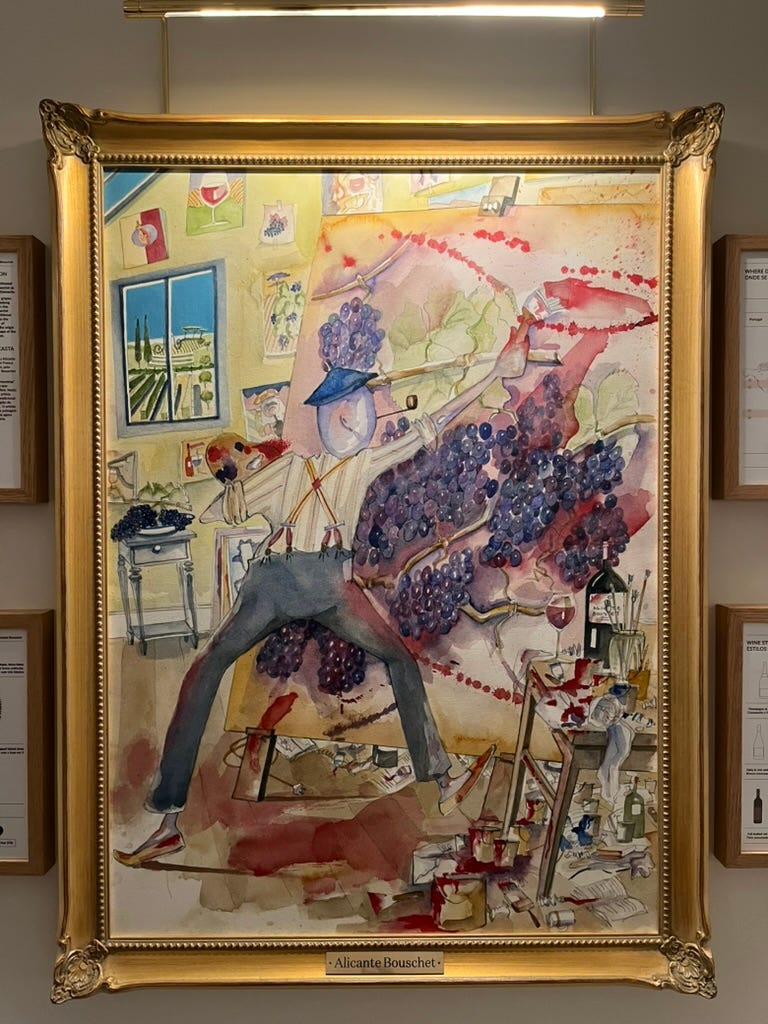
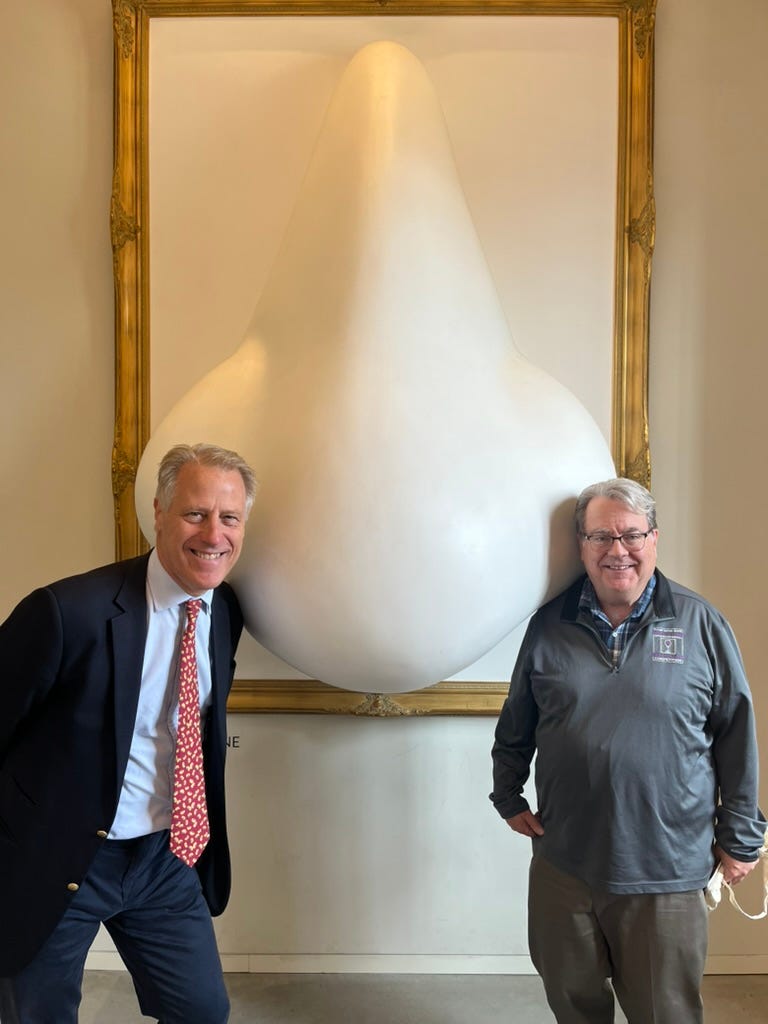
There’s also whimsy: My spiritual grape is apparently Alicante Bouschet. I weigh more than 21,000 corks (distressingly, half again as much as Rebelo). In the aroma section, there’s a selfie spot for visitors to pose next to a huge plaster nose protruding from the wall.
“People don’t seem to respond to this, for some reason,” Bridge said, with a measure of dismay.
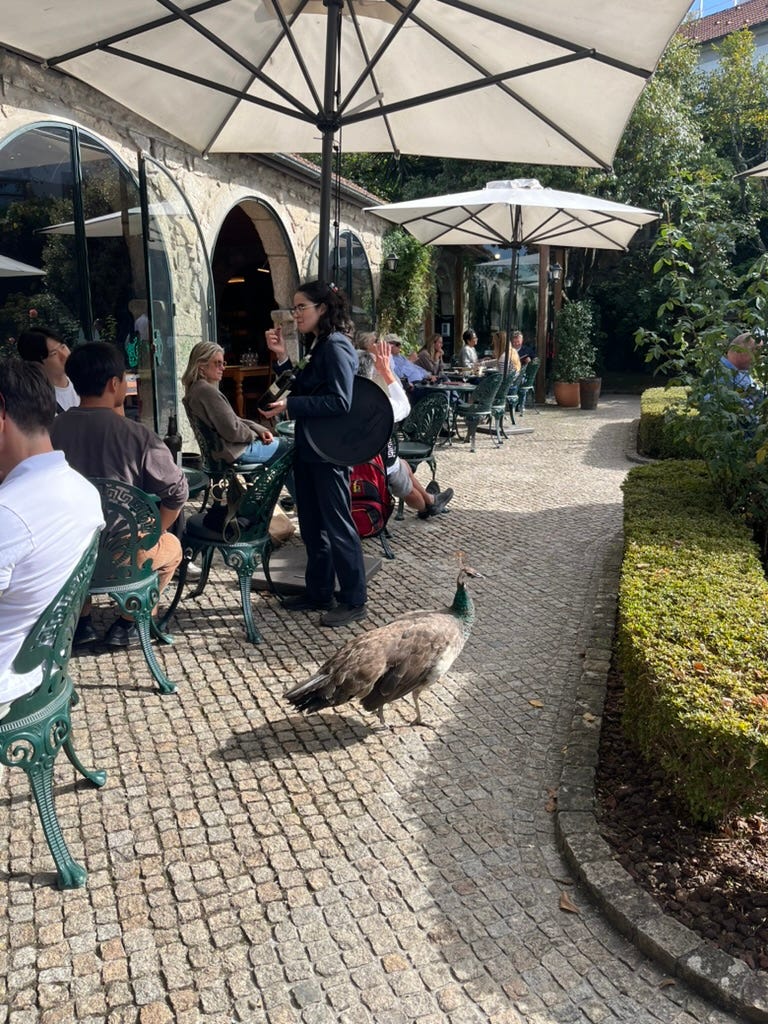
World of Wine is an expansive modern complex wedged into the cobblestoned warren of narrow streets that define Vila Nova de Gaia. It should be a must stop for wine-loving visitors to Porto. The main Taylor cellars, a few steps from The Yeatman and WOW, still have an air of tradition, despite a modern tasting room installed in 2016 and restaurant with panoramic views of Porto and the river. The courtyard when I visited was full of tourists enjoying flights of aged ports and table wines in the Taylor Fladgate portfolio. A thirsty looking peacock wandered among the tables, hoping for a spill.
“Look!” Chris Forbes, Taylor Fladgate’s deputy managing director, exclaimed as we crossed the courtyard. He pointed to a staff member carrying a distinctive carafe away from a table of patrons. “There are young people trying our Very Very Old Tawny!”
Later, after I bid farewell to Sotomayor and Guedes at Ferreira, I wandered among the evening crowds along the riverfront, finally settling behind a table on the plaza at a tourist-trap restaurant, interested in people-watching as much as food. Having just finished a four-day media trip with Wines of Portugal that took me from Lisbon to the Alentejo to the Douro and up near the Spanish border in Minho, I wanted something casual, outside the bubble. Not even a boisterous table of Eastern Europeans well into their getaway weekend could detract from my fun or my mood. The food was okay, the wines were fine. You can close your eyes and point at a wine list in Portugal, and you’ll find a gem.
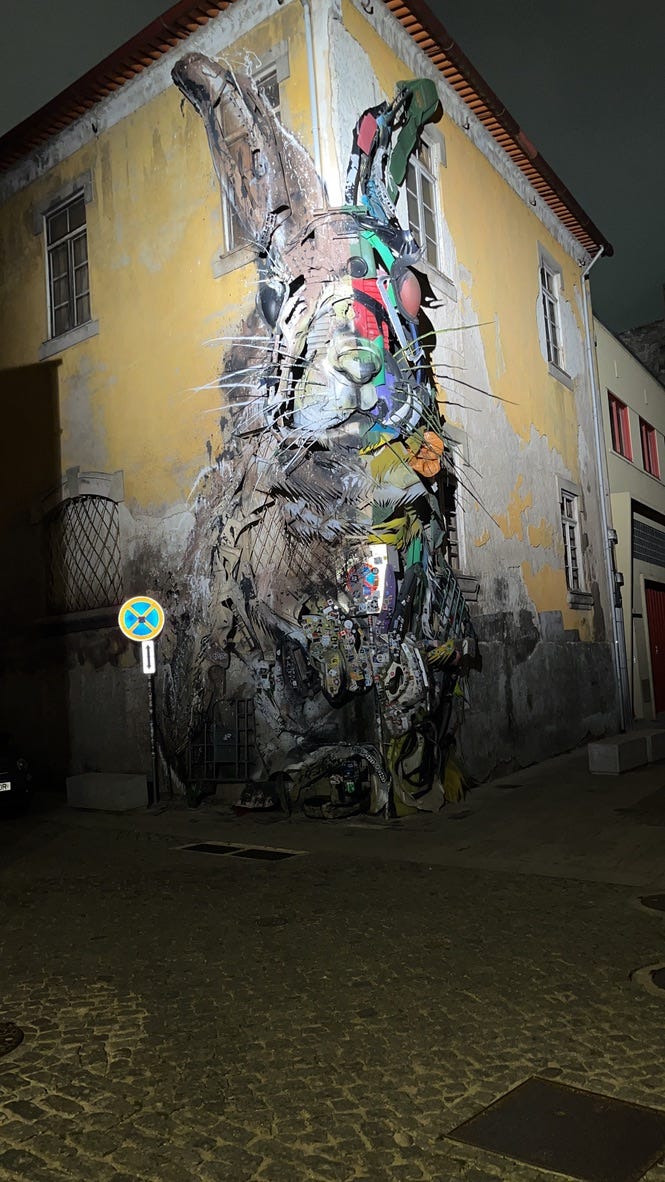
Fortified by an uninspiring sandwich and two glasses of delicious wine, I headed back up the hill toward The Yeatman. Tucked away two blocks from the crowd I encountered Half Rabbit, an art installation from 2017 by Bordalo II, an artist who repurposes “garbage” into art. The rascally rabbit seemed poised to leap from the corner of a building that probably had a centuries-long history, at once seeking to escape the past while questioning our materialism of the present. It’s not visible from the main tourist strip. You have to know it’s there or, as in my case, come across it by chance. That distance makes it less a rebuke than a warning, perhaps, of how the pursuit of modernity and tourism can strain our connection to the past.
For now, however, Porto and Portugal are reveling in their history and making it relevant to wine lovers around the world.
Here are my notes on wines from Ferreirinha and Taylor Fladgate tasted that day in Vila Nova de Gaia.
Ferrerinha Vinha Grande Douro 2022. $18-ish. Ferrerinha was one of the first houses to pioneer table wine in the Douro, beginning with Barca Velha in 1952, a top wine only made in exceptional vintages. The Vinha Grande is a blend of Touriga Nacional, Touriga Franca, Tinta Roriz (Tempranillo) and Tinta Barroca, aged in old oak. Grapes are from Douro vineyards near Pinhão and from the Douro Superior, newer plantings near the Spanish border. This wine was elegant and harmonious, showing tannin and structure.
Ferrerinha Callabriga Douro 2022. $25-ish. Essentially the same wine as the Vinha Grande but from a different terroir further east in the Douro Superior, and named for nearby Roman ruins. New oak was used on 25% of the wine. It’s a blend of Touriga Nacional, Touriga Franca and Tinto Roriz. This was structured, with dark fruits in a straightjacket of tannins. Should develop well with some more time in bottle. This was a hot year, with many days above 40C. As Fernando Guedes said, “In the Douro, we have nine months of winter and three months of hell.”
Ferrerinha Quinta da Leda 2021. $60-ish. A cooler year than ‘22. The blend adds Tinta Cão to the previous blend. New French oak is used on 50% of the wine for 18 months. This is softer and fruitier than the ‘22 Callabriga, though strong tannic structure is evident on the long finish.
Sandeman 20-Year-Old Tawny Port. Distinctive style, softer on the palate and with less volatile acidity than other aged tawnies. Flavors of orange peel, pommander spice. Lovely and elegant.
Sandeman 2000 Vintage Port. Luis Sotomayor says this was the vintage that brought Sandeman Port back from its doldrums after the winery was purchased by Seagrams in 1979. (Sogrape purchased Sandeman from Seagrams in 2002.) Ruby brick color shows age, but this wine is still dark and vibrant. The nose is meaty, with caramel. The palate is harmonious and beautiful, with berries, cola, olives and tea.
The following wines are from the Fladgate portfolio of still and sparkling wines. The portfolio was initiated in 2023 when the company purchased several established wineries in Portugal. The wines were introduced to the U.S. market beginning in late 2024.
The first three wines are from Quinta da Pedra, in the Monção and Melgaço subregion of Vinho Verde, hugging the Spanish border with Galicia. These wines do not fit the profile of high-acid, frizzante Vinho Verde that has become a popular porch-pounder in the U.S. over the last few years. They are more akin to the albariño of Rias Baixas, though perhaps with a bit more heft and body. Their hallmarks are impressive concentration, texture and persistence.
Graça da Pedra 2023 Alvarinho. This is crisp, fresh, mouthfilling and delicious, an ideal introduction to the Quinta da Pedra style. $16-ish, aimed at retail and restaurant trade.
Milagres 2021 Alvarinho. Ripe and plush, with apricot, peach and mango flavors, and a wonderful texture. Aged three years in bottle before release.
Milagres “Purple Edition” 2016 - The “Purple Edition” Milagres is made only in exceptional vintages and has at least five years of bottle age before release. Aromas are restrained, suggesting stones, citrus and concentration. The palate begins with a fresh attack from vibrant acidity, then yields flavors of mango, passionfruit and pineapple. There’s fine tension and texture to this wine.
Royal Palmeira 2020 Loureiro. From a separate property, this wine features Loureiro, the other white grape of Vinho Verde. Refreshing acidity, notes of lemongrass, lychee and orange blossom. Rather like strolling through a citrus grove during flowering.
We tasted the rest of the table wines over lunch in the Barão Fladgate restaurant, where, I confess, I enjoyed myself a little much and my notes get sloppy.
Quinta do Portal Grande Reserva Branco 2020, Douro Valley. The next big thing in Douro wine will be the whites, if for no other reason than growers have been planting new vineyards at higher elevations in the Upper Douro and in the vinous frontier of the Douro Superior, near where the river enters Portugal from Spain. As a result, we will continue to see more and more of these lean, minerally whites from native Portuguese grape varieties. For those keeping track, this one blends Gouveia, Viosinho and Rabigato. The color is straw yellow, and the wine sings of peach, nectarine and dried apricot.
Quinta do Portal Grande Reserva Tinto 2019. A classic Douro red blend of Touriga Nacional, Tinta Roriz (Tempranillo) and Touriga Franca. Complex aroma combining blackberries with Bing cherries and sarsaparilla. Lovely texture and persistence. A “gastronomic” wine.
Calcario3 do Principal 2018. Principal winery in the Barraida is the crown jewel of the Fladgate portfolio. Calcario3, named for the limestone soils, is consistently about half Touriga Nacional, with the rest being Cabernet Sauvignon and Merlot. They have several vintages and will be releasing them in stages to establish a rhythm of at least five years after harvest. At $30-ish, the Calcario3 is a great value.
Principal Grande Reserva, at about $130 a bottle, is the premier red, also with several vintages in stock. At lunch with João Rebelo and Raul Riba D’Ave, a brand ambassador for the still and sparkling wine portfolio, we tasted 2009, 2012 and 2013, all fantastic. The idea for Principal is for Cabernet Sauvignon to be more prominent in the blend, with Touriga Nacional and Merlot in supporting roles, and for the wine to age 10 years before release. That ensures the wine will be properly aged before it’s sold and consumed.
After lunch, a separate tasting of ports:
Taylor Fladgate Golden Age 50-Year-Old Tawny. Introduced to the U.S. just within the past two years. Burnt orange, hazelnut, caramel, with a sweet, nutty and prolonged finish.
Very Old Single Harvest Tawny 1975. This is part of a program to release a 50-year-old tawny each year, without cannibalizing the Golden Age tawny, which is a blend of vintages averaging 50 years. This was fresh with orange pommander flavors, a hint of rancia; it tasted more focused than the Golden Age blend.
Very Very Old Port: Essentially an 80-year-old tawny. Brown color, honeyed and nutty. I hope I’m as sweet when I reach that age.
Quinta da Vargellas 2019. A single-quinta vintage port from the flagship property of Taylor Fladgate. Vargellas is known for its floral aromas, and indeed, I seemed to have fallen into a bouquet of violets. Fresh orange peel, blackberries and mint follow and linger for a conversation. I can’t imaging aging this, it’s so damn good right now.
Sentinels 2022. I had tried this over the summer at an event in Washington, D.C., when it wasn’t eclipsed by the Vargellas. This is a new vintage ruby port from Taylor Fladgate that should be reaching the U.S. market in time for the holidays. It’s made from prime properties near Pinhão in the Upper Douro (so no Vargellas fruit) and will be made only in years when the company does not declare a classic vintage. It’s meant to be less expensive than the classic vintage (about $60-ish, I think) and for younger consumption.
Taylor 1994 - A classic vintage at 31 years. Roasted hazelnut and caramel.
Fonseca 1994 - Drying out. Aroma of potato skin. Some nice fruit compote flavors before a drying finish.
Single Harvest 1896 - packaged in a 2-cl glass tube in a fancy wooden box. It’s a roller coaster for the palate, starting with burnt citrus, then swooping into roasted hazelnut butter and twisting to a finale of crême brûlée.

Porto and Vila Nova de Gaia are technically two cities, sort of, but even the Portuguese refer to them collectively as Porto. Essentially, Gaia is a neighborhood of its more famous neighbor. It just happens that the real wine stuff happens in Gaia.
I am really looking forward to sampling some wines in Portugal. I will see if I can find any of the (ahem) less expensive ones to try! Definitely going to taste some Tawny Port on day 1!
"Very very old port." You are living the life. This is really interesting info. But please come home and help us dig deeper into Washington State, Virginia, Willamette Valley, and Finger Lakes wines. Yes, I know Texas is producing some decent wines now ... I'm almost on board there.)