

A new winery opening may seem run-of-the-mill, even if more wineries appear to be closing, but there was nothing ordinary about the opening of Burnt Hill Farm in late summer.
Located in Clarksburg, Maryland, just a few minutes’ drive off I-270 and barely north of the sprawling Washington, D.C., suburbs, Burnt Hill Farm is a world away from the dysfunction of the nation’s capital. If anything, it could serve as an antidote for it.
Burnt Hill Farm is more than a vineyard. It’s a story of family, of faith, of love and dedication. It’s a story of hardship, perseverance and renewal. Most of all, it’s a story of inspiration.
But what really sets Burnt Hill Farm apart — aside from all that — is its seamless and all but invisible integration of the winery experience with the winemaking mantra that wine is made in the vineyard.
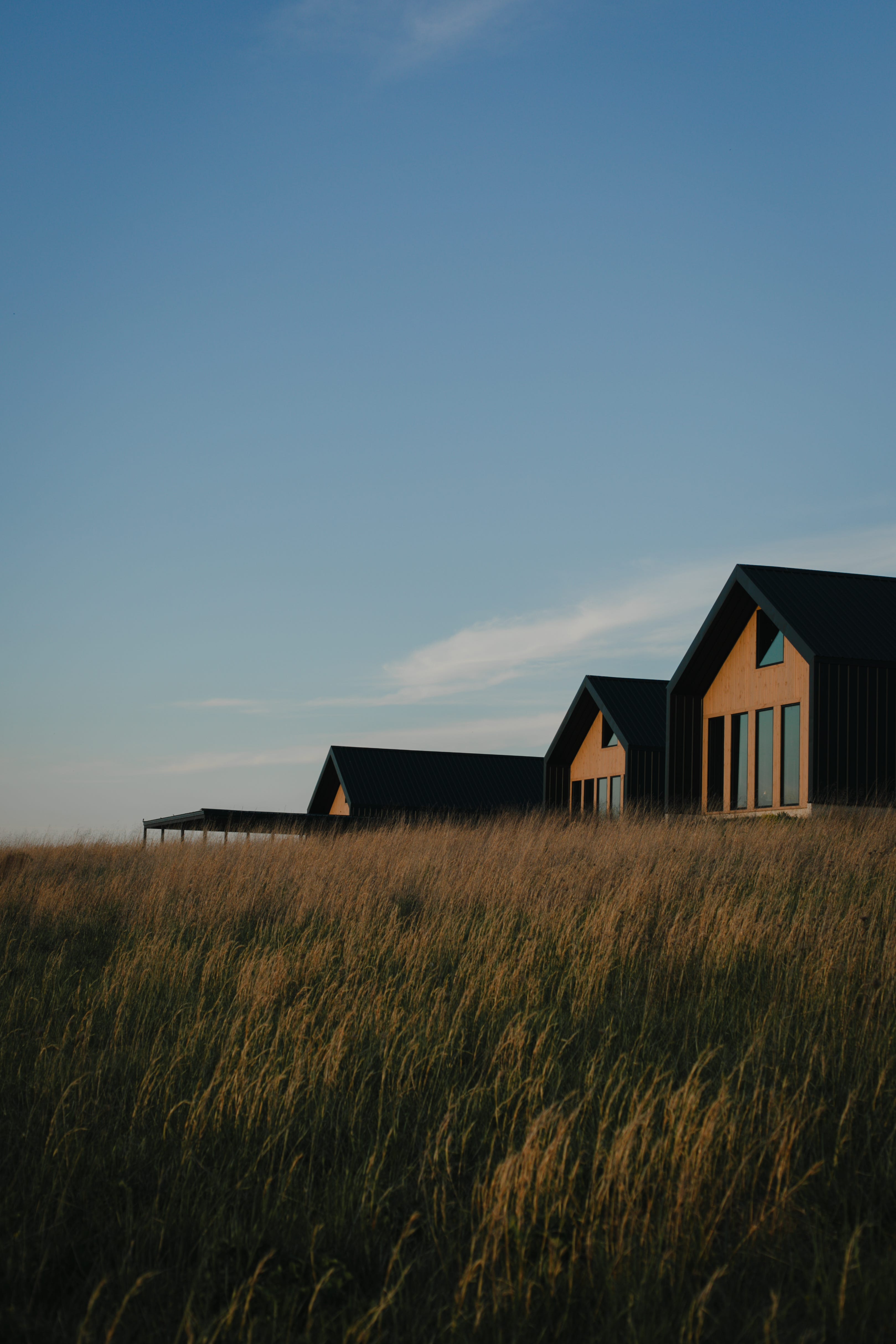
“Burnt Hill isn’t just about the wines, as proud of them as we are,” says Drew Baker, who owns Burnt Hill Farm with his sisters, Lisa Hinton and Ashli Johnson. They founded Old Westminster Winery in central Maryland in 2010 and purchased the 117-acre Burnt Hill property six years later with the goal of making world-class wine. Drew, 38, oversees the farming, Lisa, 36, makes the wine, and Ashli, 35, handles hospitality and operations.
“It’s about this place and the vines and the animals and the people who give it life,” Baker explains. “I honestly believe wine does reflect the time and place it’s grown, and that’s not just marketing BS. But some of that magic gets lost on a store shelf on the other side of the world.”
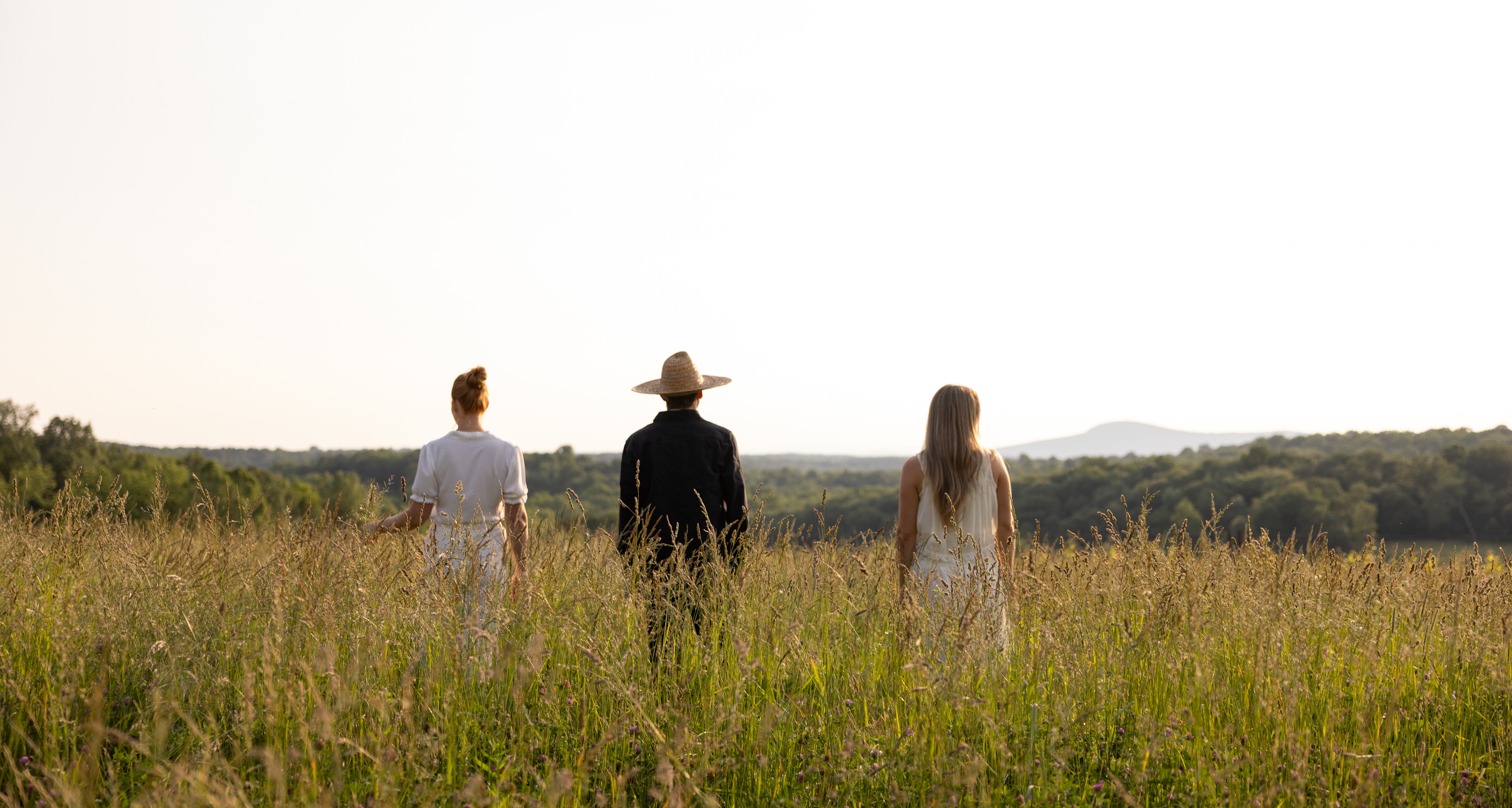
To maintain and share that magic, Burnt Hill wines are available only at the farm, not through distribution to retail and restaurants, nor through e-commerce. You have to go there to taste or buy them. (The vineyard is still young, and they are selling the 2021 vintage while it lasts. As production ramps up in future years, the sales model could relax a bit.) There’s also no winery to distract you from the farm, as production is done 24 miles away at Old Westminster.
There’s been a lot of coverage already, from East Coast Wineries blogger Carlo DeVito and Penn Live’s Paul Vigna, the prolific gazetteer of Mid-Atlantic wine. Influencers brought their ring lights and selfie-sticks and twirled around the grounds at sunset, glass of bubbly in hand. Local press from Washington and Baltimore fawned, Forbes raved, and Food & Wine hailed Burnt Hill as one of America’s most beautiful vineyards.
If it’s daylight when you visit, you may see the Mangalitsa pigs roaming on the other side of Burnt Hill Road, and your guide will point out the bee hives that produce the nectar that flavors the sesame butter you’ll spread on your warm sourdough bread made from heirloom Turkey Red wheat grown on the farm. With harvest done, you may see longwool sheep grazing among the vines. You will hear the word “polyculture.” Time your visit right, and you’ll witness a stunning sunset over Sugarloaf Mountain and the more distant Catoctin range to the west.
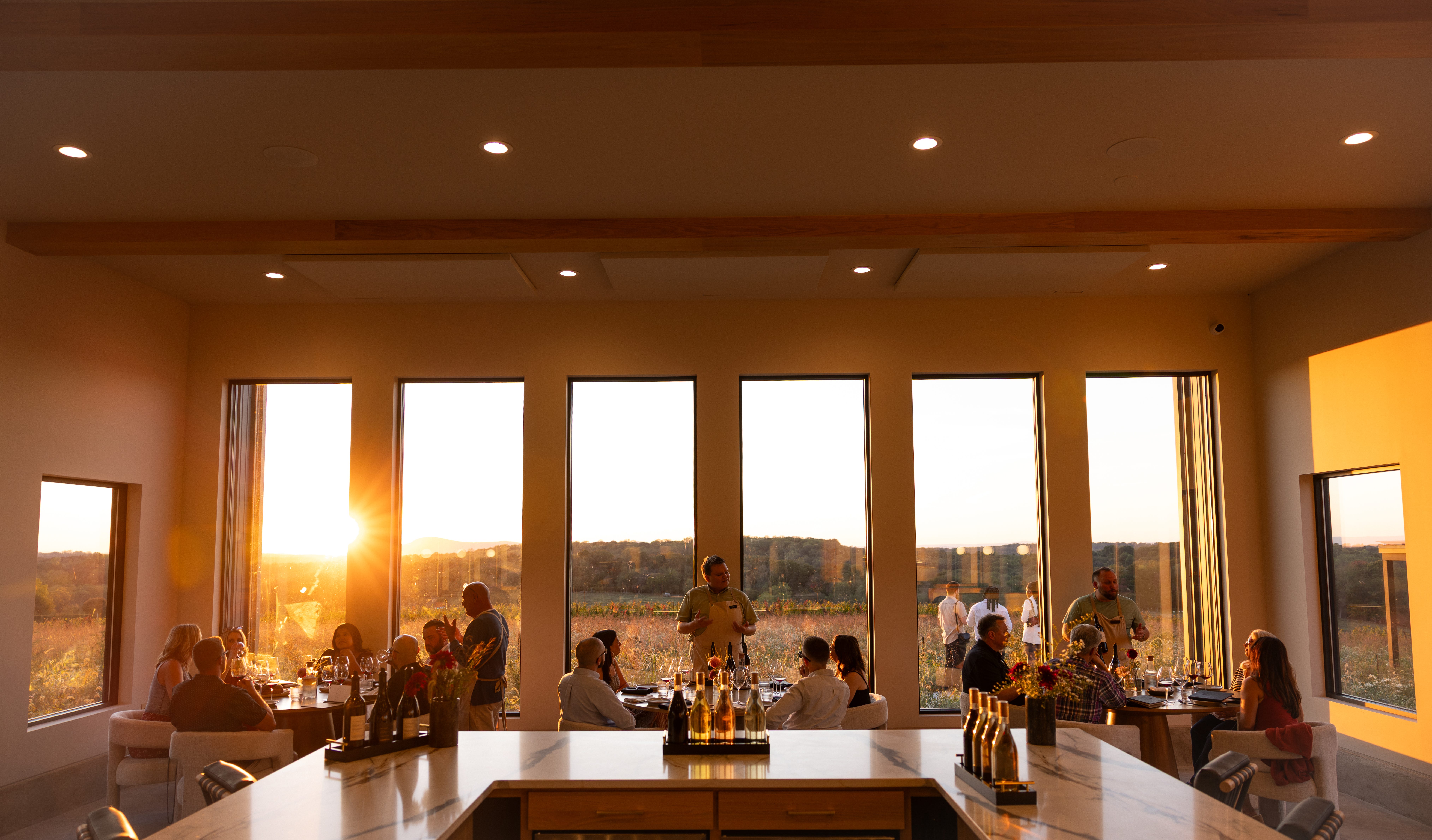
Once you’ve tilted your glass of sparkling wine into the light just so and captured the moment on your smartphone, you’ll be escorted inside the stylish, modernist barn-like tasting room, with expansive windows framing that gorgeous view. Everything is simple, but with meticulous attention to detail and quality. Note the decorations fashioned of wool from the sheep you just saw, handmade by Drew’s wife, Casey. Take time to admire decanters made from antique glass bottles recovered from an old distillery site on the property. Once seated, you’ll enjoy three Burnt Hill Farm wines with that irresistible sourdough and other seasonal “snacks” conjured by Chef Tae Strain, a veteran of several restaurants, including Momofuku in D.C., who the Bakers brought on earlier this year as a culinary partner. While Burnt Hill is not technically a restaurant, there is a short menu of other dishes guests can order, and Strain is working on a chef’s counter concept for next year. Ingredients are from the farm or sourced regionally within the Chesapeake Bay watershed. The food is served on dishes fashioned by a local artisan potter out of clay from the farm.
The experience is elegant, relaxing and delicious. But it’s more than a getaway to a winery for a few hours. As I sat in the tasting room, something else was tugging at me, and with the conversations around me and the distractions of the room, I couldn’t quite identify it. Then I felt a sense of serenity, and the volume level seemed to drop. I wasn’t just a visitor to this place. I felt I was becoming part of it.
“We are trying to support a world where people drink less wine, but better wine,” Drew Baker said, “wine grown on a living farm on a great site like Burnt Hill, made by people who care and shared in a special way at the place where it’s grown. I think that’s how Burnt Hill Farm and our wines can be transformational.
“It’s not just about world class wines, though I do believe that’s what we’re producing and what we aspire to produce,” he continued. “More importantly, it’s about transporting people away from the grind of daily life into a polyculture paradise full of beauty and deliciousness.”
As I sat there in the tasting room and the evening swathed the vineyard outside in darkness, I indeed felt transported. And I knew this feeling wasn’t just from the wine or the food, the pigs or the sheep, but also from the personal story of these three amazing people who brought Burnt Hill Farm to life.
Buying the Farm
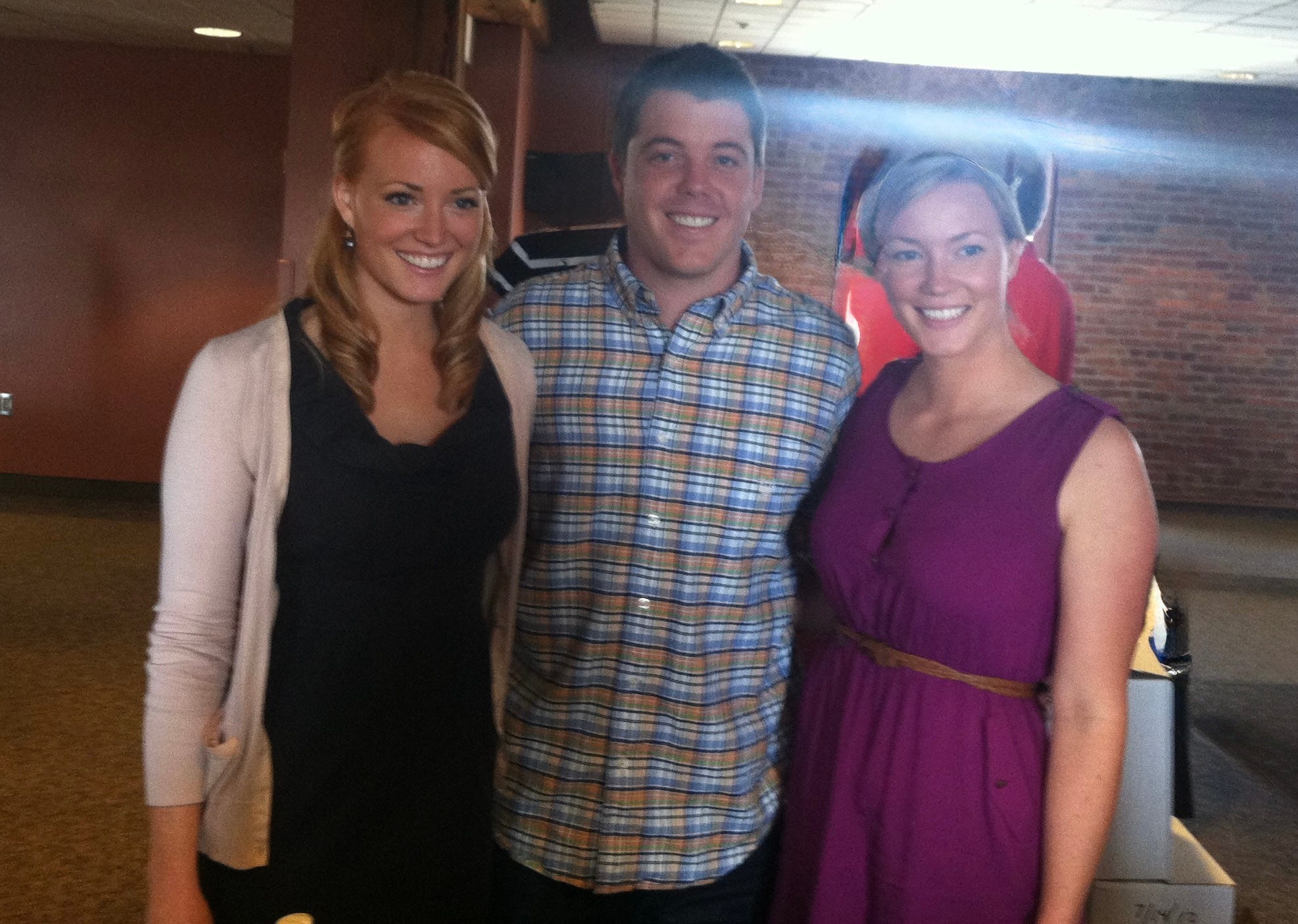
The Baker siblings have come a long way since they made their public debut in April 2013 at a Drink Local Wine tasting I helped organize at Camden Yards in Baltimore. The room that day was abuzz about this young good-looking trio who came out of nowhere with a delicious cabernet franc from the rainy 2011 harvest.
Over the next few years, each of the siblings married and began families. They opened a tasting room that now attracts crowds each weekend for delicious wines and wood-fired pizzas. Old Westminster was the first in Maryland to produce pet-nat sparklers and put wine in cans. They became darlings of the natural wine movement for Drew’s regenerative farming aesthetic and Lisa’s low-intervention winemaking.
And then they bought the farm.
I first wrote about Burnt Hill Farm for The Washington Post in January 2017, just weeks after Old Westminster closed on the purchase. At the time, I noted it would be 2022 or later before we’d be able to taste the wines. I followed their progress through the exploration of the farm’s soils and planting of the first grapes in spring 2019, hoping to guide readers through the time- and labor-intensive work involved in developing a vineyard and producing quality wine.1
In spring 2022, Drew invited me to Old Westminster to taste the young 2021 wines from Burnt Hill, their first harvest. These were components of future blends, and I was impressed with the initial quality of the cabernet franc but also unexpected varieties such as pinot noir, gamay and regent, a hybrid variety that may figure prominently on the East Coast as wineries adapt to climate change.
A few days after my visit, Drew Baker was diagnosed with acute myeloid leukemia, an aggressive bone cancer. Doctors at Johns Hopkins Hospital in Baltimore gave him a 5 percent chance of survival. Over the next two-and-a-half years, he underwent a series of grueling chemotherapy treatments, alternating progress and setbacks, remission and relapse. He needed two bone marrow transplants, and just to make the story more incredible and inspiring, the donors were his own sisters.
Baker chronicled his ordeal on social media with heartrending Millennial transparency. We were in the hospital room with him during the hard times and celebrating his homecomings to Casey and their three young children. He continues to post “life updates,” but now they are more focused on the vineyard and the new Burnt Hill tasting facility. Currently in remission and regaining strength, he credits his family, faith and large community of friends with helping him through his illness. And the farm gave him inspiration.
“Through all of the ups and downs of my life, my love for this farm has grown, and I am just so grateful to be alive and to be here and to have the opportunity to share this place and our wines with you and the world,” he said. “And that’s really the point to taste Burnt Hill wines. You have to come here.”
Baker’s illness “refined my perspective on life, faith and family,” he told me. “It shifted my perspective from making the best wine to living a life that brings us joy and gives joy to others. Wine, food and hospitality at their most fundamental level are designed to bring people joy.”
At Burnt Hill Farm, the joy is contagious.
My tasting at Burnt Hill Farm began with a glass of Old Westminster Blanc de Blanc (chardonnay) during the introductory tour. Lisa Hinton made this in the traditional method, aged 15 months on the lees. She told me future bubblies will be made with fruit from Burnt Hill Farm. Once inside, the tasting included three estate red wines from the farm.
Earthsong 2021. An elegant red made of 93 percent pinot noir and 7 percent cabernet franc, aged in neutral oak. It features bright, tart cherry flavors from the pinot (fermented whole-cluster), with the cab franc contributing color and tannin. $88
Gamay Barrel Selection 2021. Lifted, bright fruit with floral aromas. An initial whiff of volatile acidity faded with a vigorous swirl, yielding to a minerally core from the schist soils of Burnt Hill’s north block. This was fermented in large foeders made of ash wood from the farm, then aged three years in neutral oak. $132
Terrafirma 2021. A Bordeaux-style blend of 54 percent merlot, 27 percent cabernet sauvignon, 14 percent cabernet franc and 5 percent tannat, fermented in ash foeders (the cab franc was fermented in concrete) and aged three years in neutral oak barrels. Polished and silky, this offered flavors of dark fruit and cassis over graphite and wild herbs. Soulful. $88
Reservations are necessary to visit Burnt Hill Farm for the Experience described above or a more informal Lounge setting. Reservations are currently booked a month in advance. Reserve at BurntHill.farm.
My efforts were ultimately unsuccessful. Recently re-reading the 50 or so comments on my 2019 piece, I was dismayed at how many people dismissed out of hand the prospect of Maryland producing world class wine. I was also dismayed at how many of them clearly hadn’t even read the article before declaring the quest impossible.
Dave, your footnote is ... unbelievable. Maryland not producing world-class wines? Maryland and Virginia are unsung champions of wine today, small batch wineries with some of the best cab franc, viognier, petit verdot, chardonnay, and merlots I've tasted, and of late, some wonderful Bordeaux and Rhone-style blends as well. Thank you for continuing to promote our local wines!
Great story Dave. You took one of my favorite pictures of Biscotti (Bisco) pit side at Burnt hill in April 2017. The soils there are a place any wine grape would be proud to call home.