
We'll Always Have Paris ...
How the Paris Tasting of '76 Changed Wine Forever

This year, the country marks the 250th anniversary of the Declaration of Independence. It’s also a year to celebrate American wine. Fifty years ago, on May 24, 1976, a modest wine tasting in a Paris hotel altered the arc of wine history. We are still enjoying its effects a half century later.
What became known either as the Paris Tasting of 1976 or the Judgment of Paris had modest beginnings, and it almost didn’t happen. British wine merchant Steven Spurrier and his American colleague, Patricia Gallagher, wanted to explore wines from California to mark the U.S. bicentennial as part of their program for the Academie du Vin, Spurrier’s wine school for expats in Paris. Spurrier and Gallagher each traveled to California to scout wineries, and they struggled to get wines to Paris for the tasting. (Anyone who has shlepped wines home from a trip abroad can relate.) They invited some French wine luminaries to come and taste these novel wines from the New World, but only at the last minute did Spurrier decide to do the tasting blind to neutralize any preconceptions about quality. Only one reporter, George Taber of Time magazine, was curious enough to attend.
The story of wine would certainly be much less interesting if the Judgment of Paris hadn’t prompted the whole world to ask, “Why not here?”
We all know the results: Chateau Montelena Chardonnay 1973, crafted by Miljenko “Mike” Grgich, and Stag’s Leap Wine Cellars SLV Cabernet Sauvignon 1973, made by Warren Winiarski, edged out some of the best white Burgundies and red Bordeaux. Taber’s short writeup in Time magazine excited consumers and winemakers back home. The Paris Tasting proved Europe, especially France, didn’t hold a monopoly on world-class wine or terroir.
In the years that followed, French wineries invested in California, Argentina, Chile and elsewhere. In Mendoza, Nicolás Catena was inspired to find the best sites to grow Malbec and launched a revolution that continues today. Eduardo Chadwick did the same with Chilean Cabernet Sauvignon, pitting his own wines against French classics in tastings modeled after the Judgment of Paris.
Years later, Winiarski reflected on the significane of the tasting.
“We were trying to bring wine back from the nadir of Prohibition and elevate it to national consciousness,” he told me. “That tasting was affirmation that it could be done. The official hierarchy did not have the ability to keep people from making beauty wherever they were.”
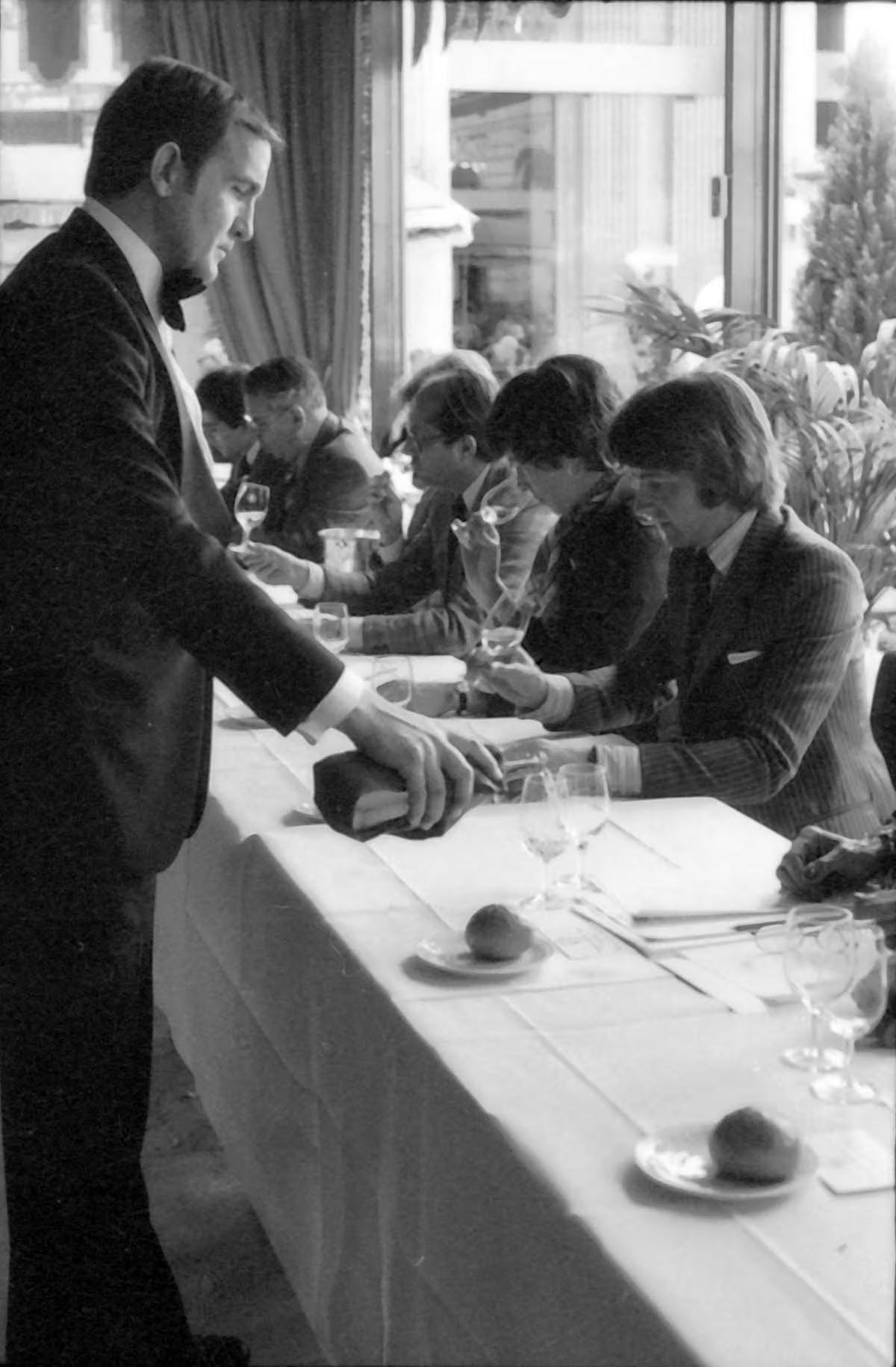
The Smithsonian Institution’s National Museum of American History held a dinner last month to commemorate the 50th anniversary of the Judgment of Paris. The museum has highlighted the tasting several times before, including for the 40th anniversary, which I wrote about for The Washington Post, and bottles of the winning wines from Chateau Montelena and Stag’s Leap Wine Cellars are on display in the museum’s exhibit on U.S. food history.
This year’s dinner featured three Napa Valley wineries included in the Paris tasting: Clos du Val, Freemark Abbey and Mayacamas Vineyards. Although their wines didn’t “win” and go down in history, they contributed to the paradigm shift that elevated California and other regions in the world of wine.
Bernard Portet, who crafted the Clos du Val 1972 Cabernet Sauvignon included at Paris, spoke at the dinner of the impact the tasting had on the U.S. wine industry.
“The effect was huge,” Portet said. “Nobody knew about Napa Valley in those days, and suddenly they read about it in Time magazine. In the months after that, we had all sorts of influx of tourists coming to see what we were doing.”


Spurrier often spoke and wrote about the backlash he felt from the French wine community for conducting the Paris Tasting, but Portet said he heard mostly positive comments from his fellow Frenchmen. Many of the visitors to Clos du Val were Bordeaux friends and colleagues of his father, who had been technical director at Château Lafite Rothschild. After the tasting, they were interested in knowing what he was doing in Napa Valley.
I had the pleasure and honor of knowing Spurrier and Winiarski during my wine writing career. Spurrier was a fan of Virginia wines (true to form from Paris, he reveled in good wine from unheralded regions) and we judged the Virginia Governor’s Cup competition together for several years and even traveled together to Okanagan Valley in British Columbia in 2019. He wore his fame well and always made anyone he was talking to feel special, including winemakers as he critiqued their wines.
I met Winiarski when the Smithsonian opened its food history exhibit in 2011. He was a major donor for the museum’s food history program, in part because he wanted to preserve the legacy of the Paris Tasting and his achievement. He was soft-spoken and professorial, and my eyes would spin when he described the golden rectangle as his ideal of a balanced wine. He was generous, though a hard edge appeared when something didn’t live up to his expectations. Every time I spoke to him, I learned something, even if I wasn’t quite sure what. He even gave me his cell phone number, and I wish I had abused that privilege more often before he passed.
And I met Mike Grgich twice. He came to D.C. for some event at a Wolfgang Puck restaurant celebrating a milestone of his winery or career, and I have a treasured photo of me with the two of them (which of course I can’t find now). In 2016, Grgich was too frail from back issues to travel to D.C., but I visited him in Yountville as I was researching my piece on the commemoration.


Spurrier, Grgich and Winiarski passed away since that last celebration, and the memory of the tasting and its impact will fade over time. I’ve even seen some grumbling from within the wine community about the attention Napa Valley still basks in because of it, but I think that misses the point. Yes, the two winning wineries were in Napa, but the real winner was California wine in general and the realization that Europe, especially France, didn’t have a monopoly on world-class wine.
Even today, wine lovers in Virginia, New York, Texas and elsewhere delight in wrapping bottles in paper bags so they can prove to themselves and anyone nearby that their local wines stand tall among the world’s best. Efforts to produce top-class wine in China, Armenia or Bulgaria can trace their inspiration back to the Paris Tasting.
If Spurrier and Gallagher hadn’t done the tasting, or if Taber hadn’t attended, wine would have improved around the world anyway. But progress might have come slower. And the story would certainly be much less interesting if the Judgment of Paris hadn’t prompted the whole world to ask, “Why not here?”
Little known — or understated — facts about the Paris Tasting:
Chateau Montelena is in Calistoga in Napa Valley, and its triumph in Paris has been celebrated as a win for Napa. But its chardonnay was labelled as from Napa and Alexander Valleys, and most of the grapes came from Sonoma County, in Alexander Valley and from the Bacigalupi Vineyard in Russian River Valley. Today, Chateau Montelena continues to make chardonnay in a similar style from Napa Valley fruit.
Many wine lovers today may know of the Paris Tasting from the movie “Bottle Shock,” a highly fictionalized account that focused solely on Chateau Montelena and ignored Stag’s Leap’s victory among the red wines. Winiarski refused to cooperate with the movie and was omitted altogether. Grgich also declined, and was consigned to a brief cameo as an older guy wearing a beret. The Barrett family of Montelena participated and reaped the publicity from the movie. Spurrier was portrayed by a sneering Alan Rickman, very much out of character. Years afterwards, Spurrier described the movie as “more bulls**t than bottle shock.”
The best reference about the Paris Tasting is George Taber’s 2006 book, “Judgment of Paris,” which tells the story of the tasting and explores its global impact on wine. Spurrier’s memoir, “A Life in Wine,” includes his account of the event, and the Academie du Vin Library, a publishing imprint founded by Spurrier, has published “Judgment of Paris,” a 50-year retrospective.
The event historically legitimized "New World" wine. Truly revolutionary. Thanks for the excellent summary.
Great column, how fortunate you were to have known those legends. I heartily recommend Taber's book "Judgment of Paris" -- especially for anyone who watched "Bottle Shock" and assumed that it was historically accurate. (Grgich didn't want to be involved with the making of that movie, hence the substitution of Gustavo Brambila as the winemaker -- even though in real life he was actually doing quality control at the vineyard at that time.)